Guides and ResultsEntrance exams and schools
What is the ISEB? Understanding the Common Pre-Tests
By Pennyfeather Education 28 January 2026
What is ISEB?
The Independent Schools Examinations Board (ISEB) offers assessments that help senior schools evaluate applicants fairly and consistently. One of their key tools is the ISEB Common Pre-Tests, which are designed for pupils applying to Years 7 or 9.
Unlike traditional exams, the Common Pre-Tests are shared assessments. Pupils take the tests once, and the results can be used by multiple schools. The tests are available online and can be taken between October and June. Each pupil sits the tests just once per academic year, although schools may apply them differently depending on their admissions policies.
Why the Common Pre-Tests Exist
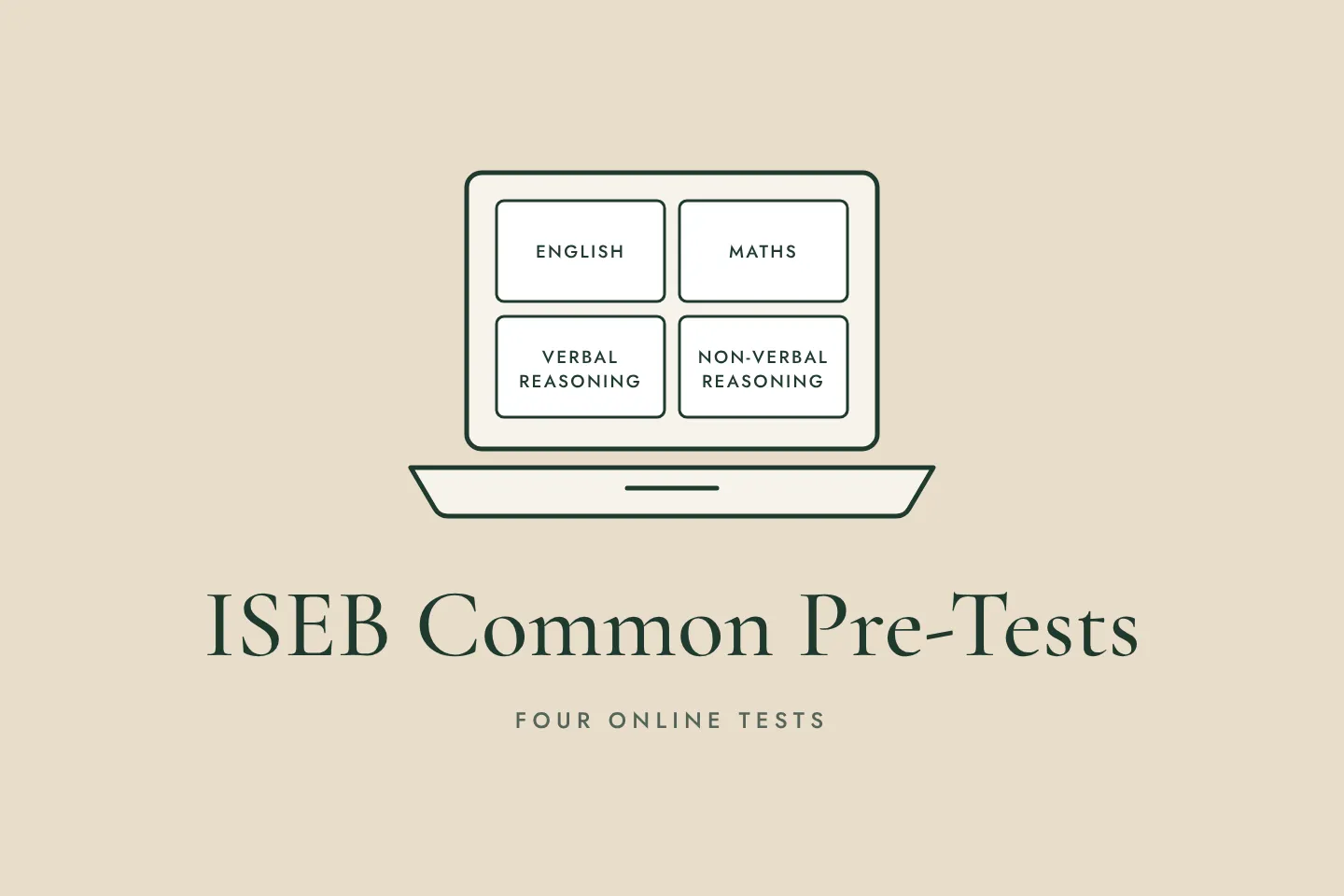
The tests are intended to give pupils the chance to show their academic potential across four areas:
- English
- Mathematics
- Verbal Reasoning (VR)
- Non-Verbal Reasoning (NVR)
All four are adaptive multiple-choice tests, meaning the questions adjust in difficulty according to how the pupil performs. This ensures the test is neither too easy nor too hard and provides a reliable measure of ability.
English: Reading and Language Skills
The English section assesses both comprehension and language knowledge. Pupils read short passages, which can be stories, factual texts or poems, and they answer questions about:
- Understanding and retrieving information
- Drawing inferences
- Explaining word meanings in context
- Analysing how writers use language
- Summarising and comparing ideas
The grammar portion tests knowledge of sentence structure, punctuation, spelling and vocabulary. Pupils are asked to identify correct usage rather than memorising technical grammar terms.
Mathematics
The maths test covers areas taught up to the end of Year 5 in the National Curriculum, including:
- Arithmetic and number work
- Fractions, decimals and percentages
- Measurement, geometry and statistics
- Problem-solving tasks that combine topics
This allows pupils to show both calculation skills and logical thinking.
Verbal and Non-Verbal Reasoning
- Verbal Reasoning evaluates the ability to work with language logically, including vocabulary, patterns in words and problem-solving using words and letters.
- Non-Verbal Reasoning measures logical thinking and spatial awareness using diagrams and shapes, helping schools understand how pupils approach visual problems.
Both tests provide insight into a pupil’s reasoning skills beyond standard subject knowledge.
Accessibility and Fairness
ISEB has built features to support all pupils, including:
- Options to adjust font size and use coloured overlays
- Tools to reduce anxiety, such as hiding the timer
- Adaptive testing that matches each pupil’s ability
The tests are also designed to be fair and accessible to pupils with special educational needs.
How Schools Use the Results
Scores are age-standardised, so pupils of different ages can be compared fairly. Schools use these results alongside interviews and other assessments to make admissions decisions. The ISEB Common Pre-Tests are valued because they give a clear, standardised picture of a pupil’s academic strengths.
Conclusion
For families applying to UK independent schools, the ISEB Common Pre-Tests provide a practical and fair way for schools to assess potential. Understanding what the tests involve — from English and Maths to reasoning skills — helps pupils prepare effectively and demonstrates their abilities confidently.